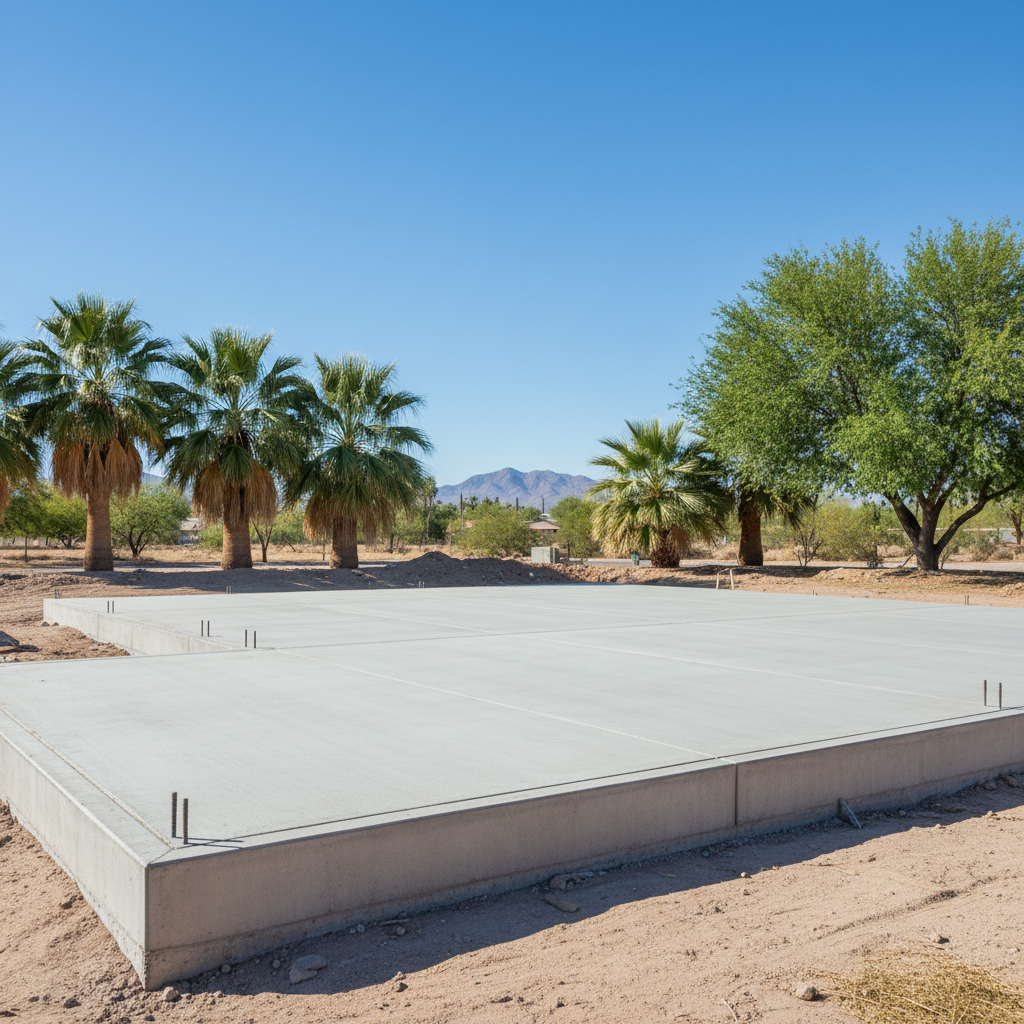
A concrete foundation isn't just some slab you pour and then forget about. Nope. It's literally the bedrock of your home, or really, any structure you're putting up. Here in Bullhead City, where the ground can be a real pain — sometimes with tricky, expansive clay soils, sometimes just plain rocky — getting it right is even more important. I've been in this business long enough to see folks make the same mistakes over and over, and trust me, trying to fix a foundation problem after the fact? That's a nightmare. So, let's talk about what to watch out for.
Mistake #1: Not Really Checking Out Your Contractor
This is probably the biggest one out there. You wouldn't hand your car keys to a mechanic who just bought a wrench yesterday, would you? So why would you trust your foundation — the very thing holding up your home — to the lowest bidder without actually looking into their qualifications? I see it constantly. Someone gets three bids, picks the cheapest one, and then, months later, they're calling me, scratching their head, wondering why their new addition is cracking.
Here’s what you really need to do: Ask for references, and then call them. Seriously, pick up the phone. Don't just scroll through pretty pictures online. Ask specifically about their experience with foundations, not just general concrete work. And make sure they're licensed and insured to work here in Arizona. A legitimate contractor, like us at Top Notch Concrete Solutions, won't bat an eye at showing you proof of insurance and licensing. If they start to hem and haw, that’s a huge red flag. Oh, and ask about their warranty. A good contractor stands behind what they build.
Mistake #2: Skipping Soil Reports or Proper Site Prep
You can't build a strong house on a weak foundation, and you definitely can't build a strong foundation on bad soil. Bullhead City has its own unique quirks, you know? We've got spots with tons of caliche, which is super hard, but then you might hit pockets of expansive clay that can swell and shrink like crazy with moisture changes. If your contractor isn't talking about a soil report for a new build or a big addition, that's a real problem. A soil engineer can tell you exactly what's lurking under your proposed foundation and recommend the best type of foundation and how to get the site ready.
Proper site prep isn't just about making the ground flat. It means compacting it correctly, making sure water drains away from the foundation, and sometimes even digging out unsuitable soil and replacing it with engineered fill. If you see a crew just scraping the top layer and pouring concrete, you're practically inviting trouble down the road.
Mistake #3: Not Understanding the Foundation Type
There isn't just one type of foundation that fits every situation. Are you getting a slab-on-grade? A post-tensioned slab? Or maybe a raised foundation with a crawl space? Each one has its good points and bad points, and more importantly, each is better suited for different soil conditions and what your structure needs. Your contractor should be able to explain *why* they're recommending a particular type for your project and our local area.
For instance, in places with expansive soils, a post-tensioned slab might be a smarter choice because it's designed to handle ground movement better than a conventional slab. If your contractor can't explain these differences clearly, or just says,