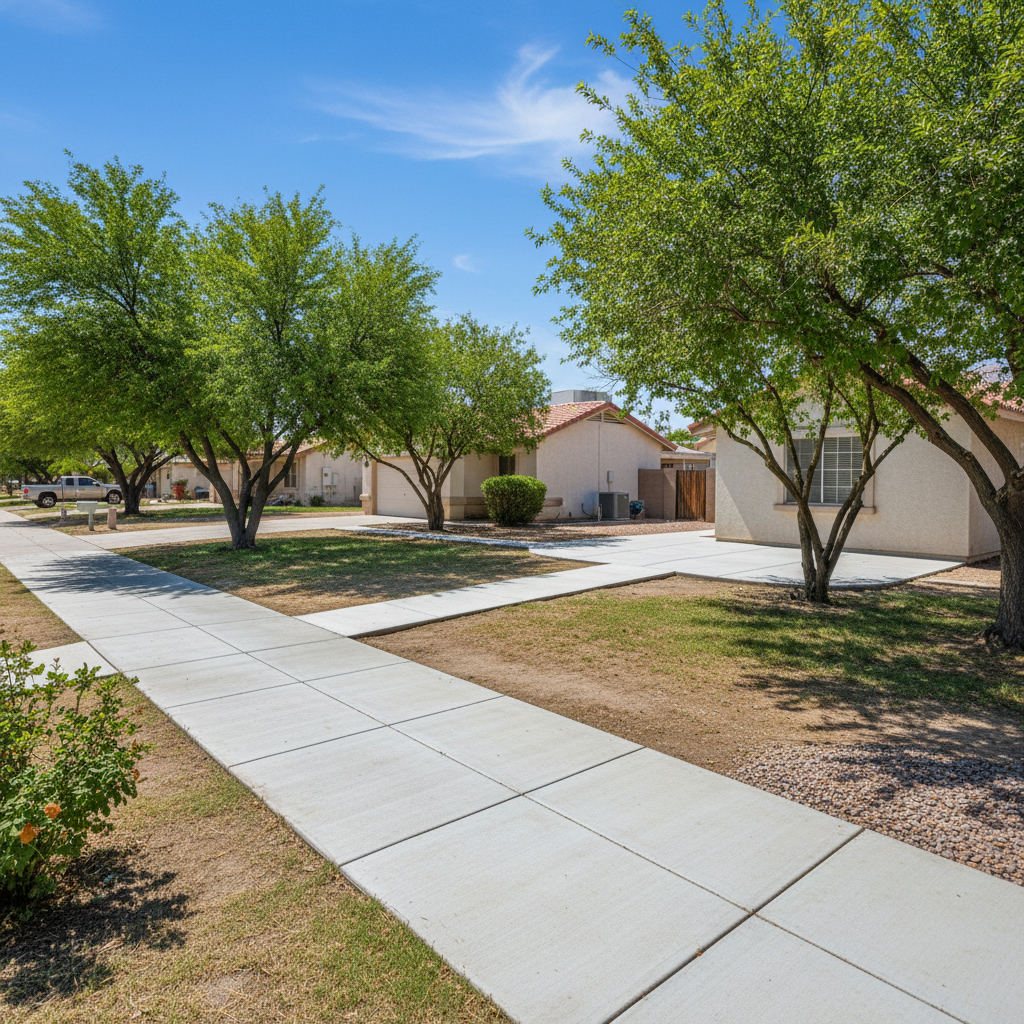
Alright, let's talk about concrete sidewalks here in Bullhead City. Maybe you're thinking about adding a new path, swapping out an old cracked one, or just extending a walkway you already have. Smart move. A well-built concrete sidewalk really boosts your property's curb appeal, makes things more functional, and definitely safer. But, of course, the big question is: what's it going to set you back?
Look, there's no single, easy answer to that. But I can give you some real numbers and help you understand exactly what you're paying for. I've been pouring concrete around here for years, and trust me, I've seen it all.
What Makes the Price Go Up or Down?
A few key things really drive the cost. If you get a handle on these, you'll have a much clearer picture when you start getting quotes.
- Size and Thickness: This one's pretty straightforward, right? A bigger sidewalk means more concrete, more labor, and more prep work. Standard residential sidewalks are usually four inches thick. But if you're planning to drive a vehicle over it — like a driveway extension or a path to a detached garage — you'll need six inches. That costs more per square foot, naturally.
- Site Preparation: This is a huge factor. If your ground is already nice and level, and clear, that's fantastic. But if we have to yank out old concrete, dig up a bunch of dirt, or wrestle with tree roots, that's extra work and extra cost. Here in Bullhead, we often run into caliche or really hard-packed desert soil. That can make digging a lot tougher and take longer than working with softer ground.
- Accessibility: Can we get our equipment right up to where we're working? If we have to wheelbarrow concrete a long way or squeeze into a super tight spot, that just adds to the labor time.
- Reinforcement: For most residential sidewalks, we use rebar or wire mesh to strengthen the concrete and help keep it from cracking. Rebar costs a bit more but gives you superior strength, especially in spots with heavier foot traffic or potential ground movement.
- Finish Type: A standard broom finish is what most people go for; it's the most common and budget-friendly. If you want something fancier — say, a smooth trowel finish, exposed aggregate, or even stamped concrete (though that's usually a whole different conversation) — the price will definitely climb.
- Permits: If your sidewalk connects to a public right-of-way or is part of a bigger project, you might need a city permit. This is usually a small fee, but it's part of the overall cost, so don't forget it.
Typical Costs in Bullhead City
Okay, let's get down to brass tacks and talk actual numbers. For a standard four-inch thick concrete sidewalk with a broom finish, here's generally what you can expect:
- Basic Sidewalk (4-inch, broom finish, easy access, minimal prep): You're usually looking at around $8 to $12 per square foot. This is for straightforward jobs where the ground is pretty much ready to go.
- Standard Sidewalk (4-inch, broom finish, some prep, rebar/mesh): Most jobs fall into this category, costing between $10 to $15 per square foot. This includes standard digging, the right base material, and reinforcement.
- Heavy-Duty or Complex Sidewalk (6-inch, extensive prep, difficult access, special finishes): This can run you $15 to $25+ per square foot. Think about those paths that need serious grading, old concrete removal, or a thicker slab for vehicle traffic.
So, for a typical four-foot wide, 50-foot long sidewalk (that's 200 square feet), you could be looking at anywhere from $1,600 to $5,000. It really depends heavily on all those factors I just ran through.
What Should a Quote Show You?
When you get a quote from a reputable contractor like Top Notch Concrete Solutions, it should be clear and detailed. Don't ever accept just a scrap of paper with only a total number on it. Here's what you want to see:
- Scope of Work: A clear description of exactly what's being done. How many square feet? What thickness? What kind of finish?
- Materials: Specifics on the concrete mix (like 3000 PSI), the type of reinforcement (rebar size/spacing or mesh gauge), and the base material.
- Site Preparation: Details on the digging, grading, and removal of any existing material.
- Labor Costs: Often bundled into the per-square-foot price, but it should be clear that labor is included.
- Permits: Who's responsible for pulling them, and are the fees included in the price?
- Cleanup: What happens to all the debris? A good contractor always cleans up their mess.
- Warranty: What kind of guarantee do they offer on their work?
- Total Price: The final, all-in cost.
How Not to Overpay
Nobody wants to get ripped off, especially when you're putting money into your property. Here are my best tips:
- Get Multiple Quotes: Always, always get at least three detailed bids. This helps you compare apples to apples and understand the going rate for your specific job.
- Check References and Reviews: Don't just take their word for it. Look at their past work, talk to previous clients, and check online reviews. A good reputation isn't just given, it's earned.
- Ask Questions: If something in the quote isn't clear, ask. A good contractor will be happy to explain everything to you.
- Beware of Lowball Bids: If one quote comes in way lower than all the others, be very, very cautious. They might be cutting corners on materials, labor, or just not including everything in the price. You often get what you pay for, you know?
- Don't Pay Upfront in Full: A small deposit is pretty common, but never hand over the full amount before the work even starts. A typical payment schedule might be 25-50% upfront, with the rest due once you're happy with the completed job.
- Verify Insurance: Make sure the contractor has liability insurance and worker's compensation. If they don't, you could be on the hook if someone gets hurt on your property.
Investing in a new concrete sidewalk is a really solid choice for any Bullhead City homeowner. Do your homework, ask the right questions, and you'll end up with a beautiful, durable path that serves you well for decades.