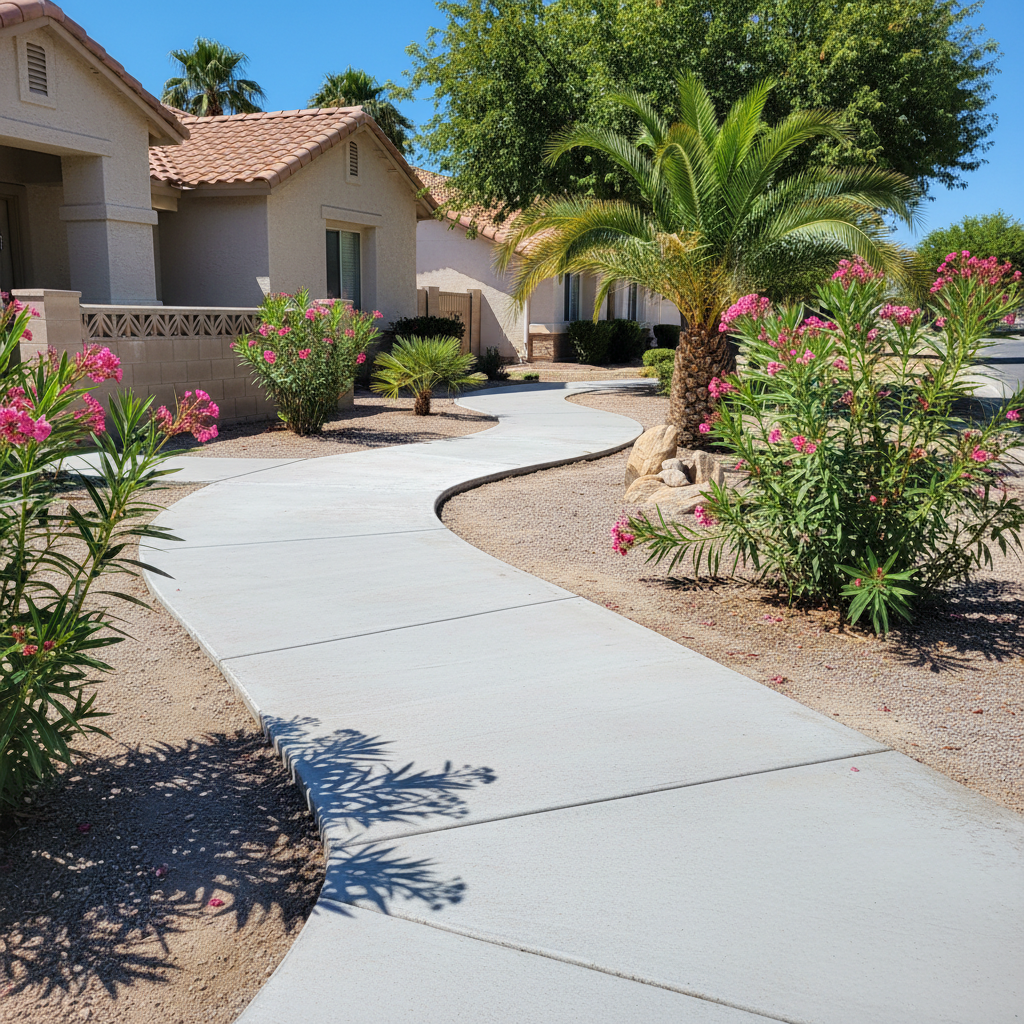
Nobody wants a cracked, crumbling sidewalk, right? It's not just an eyesore; it's a tripping hazard, and honestly, it just makes your property look a bit neglected. Here in Bullhead City, our concrete sidewalks face some pretty tough challenges. That intense Arizona sun, the dry heat, and even the occasional monsoon downpour can really do a number on them. But with a little know-how, you can keep your sidewalks looking good and performing safely for a long, long time.
Extend Your Sidewalk's Life: Prevention is Key
Think of your sidewalk like your car – a little preventative care goes a long way. The biggest enemy of concrete around here, besides bad installation, is water and those wild temperature swings. We don't get a lot of freezing, sure, but that intense summer heat followed by cooler nights can cause expansion and contraction, which eventually leads to cracks.
First off, keep it clean. Dirt, debris, and especially organic stuff like leaves or grass clippings can hold moisture against the concrete. That moisture, combined with our heat, can encourage mold or algae growth, which not only looks bad but can also make the surface slippery. A simple sweep or a quick hose-down regularly is all it takes.
Next, consider sealing. If your sidewalk wasn't sealed when it was poured, or if it's been a few years, a good quality concrete sealer is going to be your best friend. It acts like a shield, protecting the surface from water getting in, UV rays, and even oil stains. I usually recommend resealing every 2-5 years, depending on the sealer type and how much foot traffic it gets. It's an investment that really pays off in terms of how long your sidewalk lasts.
Finally, watch out for tree roots. This is a super common issue, especially in older neighborhoods with mature trees. Roots can lift and crack concrete from underneath, no joke. If you're planting new trees, pick species with less aggressive root systems or just plant them far enough away from your sidewalks and foundations. If you already have a problem, sometimes a root barrier can help, but often, it means dealing with the root itself and then repairing the concrete.
Regular Maintenance: Simple Steps for a Smooth Path
Maintaining your concrete sidewalks isn't rocket science, but it does require a consistent effort. It's mostly about keeping an eye on things and addressing small issues before they become huge headaches.
- Sweep and Hose Down: Like I said, regular cleaning is crucial. A quick sweep once a week and a hose-down every month or so will prevent buildup. If you see any stubborn stains, try a stiff brush with some mild detergent and water.
- Address Weeds: Weeds love to sprout in cracks. Not only do they look bad, but as they grow, their roots can widen those cracks, making the problem worse. Pull them out by hand or use a targeted weed killer.
- Check Drainage: Make sure water isn't pooling on your sidewalk after rain or irrigation. Proper drainage is vital. If water sits, it can seep into the concrete and cause issues. Sometimes a simple regrading of the soil next to the sidewalk can fix this.
- Inspect Regularly: Just take a walk down your sidewalk once a month. Look for new cracks, spalling (that's flaking surface), or any signs of sinking or lifting. The sooner you spot a problem, the easier and cheaper it is to fix.
Warning Signs: When to Pay Closer Attention
Your sidewalk will tell you when it's in trouble; you just need to know what to look for. Don't ignore these signals:
- Hairline Cracks Becoming Wider: Small cracks are common, but if they start to widen or spiderweb, that's a red flag. Water can get in there, freeze (rarely here, but it happens), and expand, or just erode the base material.
- Uneven Slabs (Tripping Hazards): If one section of your sidewalk is higher or lower than the adjacent one, you've got a problem. This often indicates a shifting base or tree root intrusion. This is a major safety concern.
- Spalling or Flaking: If the surface of your concrete is flaking off, it could be due to poor quality concrete, improper finishing, or exposure to de-icing salts (which we don't use much here, thankfully) or other chemicals. It compromises the structural integrity and appearance.
- Pitting: Small holes or pits on the surface can be caused by aggregate popping out or chemical exposure. It's usually a sign of surface deterioration.
- Discoloration or Stains You Can't Remove: While some stains are just cosmetic, persistent dark spots or streaks could indicate ongoing moisture issues or even oil leaks that are penetrating the concrete.
When to Call a Professional: Don't DIY Everything
Look, I'm all for saving a buck and doing things yourself, but some jobs are best left to the pros. When you see these issues, it's time to pick up the phone and call a concrete specialist like us at Top Notch Concrete Solutions.
- Major Cracks or Multiple Cracks: If you have cracks that are wider than a quarter-inch, or if your sidewalk looks like a spiderweb of cracks, a simple patch won't cut it. This often points to a deeper structural issue with the base.
- Significant Unevenness or Sinking: If slabs are severely uneven, or if a whole section of your sidewalk has sunk, you're looking at a base failure. This isn't just a cosmetic fix; it's a structural repair that needs expertise. We've seen this happen a lot in areas with expansive clay soils after heavy rains, where the ground can swell and then shrink, causing movement.
- Extensive Spalling or Pitting: If a large portion of your sidewalk's surface is flaking or pitting, it might be beyond a simple patch and seal. Sometimes, a concrete overlay or even replacement might be the most cost-effective long-term solution.
- Tree Root Damage: Dealing with aggressive tree roots can be tricky. You need to remove the root without damaging the tree too much, then repair or replace the concrete. It's a job for someone who knows how to handle both.
- Drainage Issues Causing Damage: If water is consistently pooling and damaging your sidewalk, and you can't figure out why or how to fix it with simple grading, a professional can assess the situation and recommend a proper drainage solution.
Your sidewalks are an important part of your property's curb appeal and safety. A little attention goes a long way in making sure they serve you well for decades. Don't let those small problems become big, expensive ones.