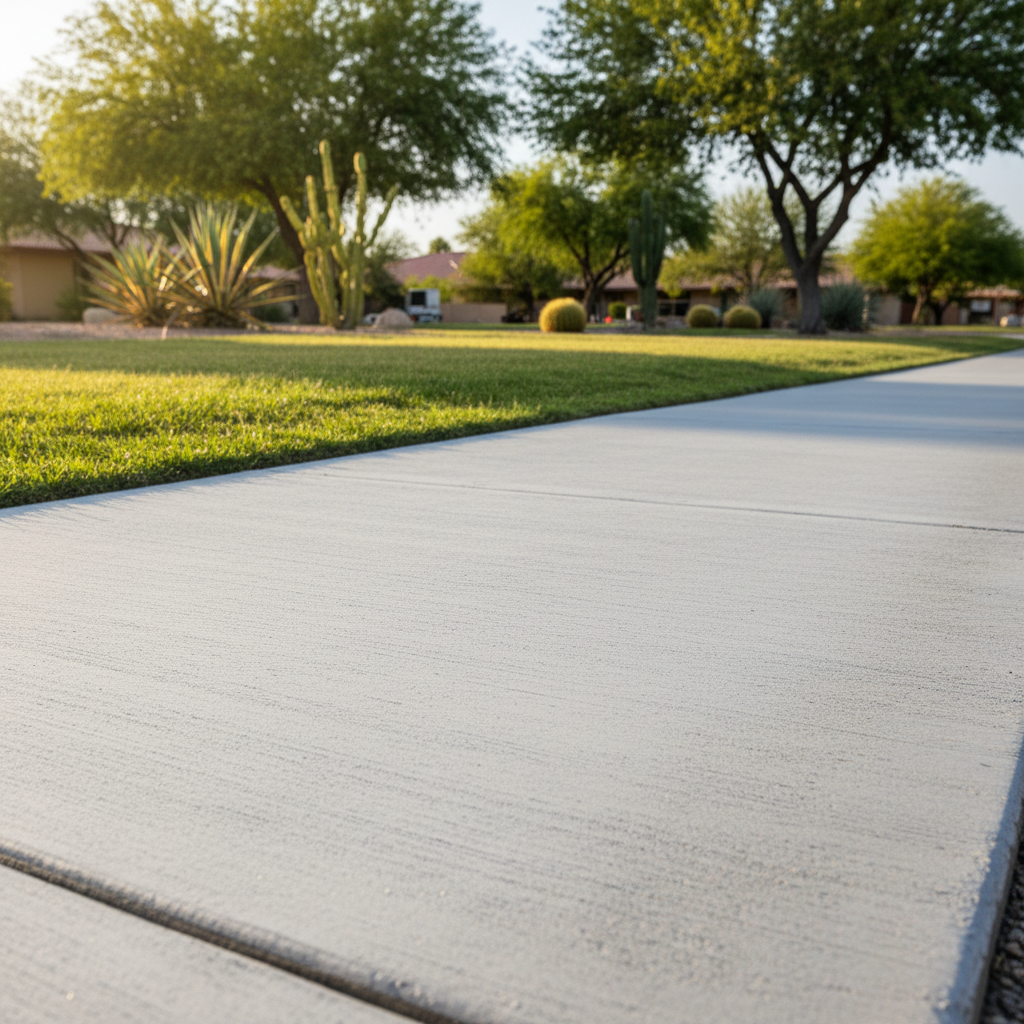
Alright, let's talk about concrete sidewalks. You've got 'em, your neighbors have 'em, and sometimes they just don't behave. Living here in Bullhead City, we know our concrete really takes a beating. The scorching sun, those occasional monsoon downpours, and even our unique desert soil can totally put a sidewalk through its paces. I get a lot of the same questions from folks, so I figured it's high time to just lay it all out there. Here's what you need to know.
How long should a concrete sidewalk last in Bullhead City?
You're generally looking at a good 25 to 40 years, maybe even more, if it's put in correctly and you take care of it. I've definitely seen some sidewalks around town, especially in older spots like Riviera, that have held up for decades. But honestly, how long it lasts really boils down to a few key things: the quality of the initial installation, how much foot traffic it sees, and whether you're doing any kind of maintenance. Our extreme temperature swings here—from those brutal summer days to cooler desert nights—make concrete constantly expand and contract. That thermal stress is a huge factor, so a well-installed sidewalk with proper expansion joints is absolutely crucial for it to last.
What causes cracks in my sidewalk, and are they all bad?
Cracks are pretty much a given with concrete. It's not a question of 'if,' but 'when' and 'where.' The main culprits here in Bullhead City are those temperature swings I just mentioned. Concrete expands when it's hot and shrinks when it's cold, and if it doesn't have room to move, well, it cracks. Our desert soil can also be tricky; expansive clay soils, which are common in some areas, can swell and shrink, really pushing on your slabs. Poor sub-base preparation during installation is another big one. Most hairline cracks aren't a huge deal, just cosmetic. But if you start seeing cracks getting wider, becoming a tripping hazard, or one side is higher than the other, that's a sign of a bigger problem, usually because of shifting or settling. Water can get into those cracks, erode the sub-base, and make things worse fast, you know?
What's the deal with those cuts in the concrete? Are they cracks?
Those are called control joints or expansion joints, and they're actually a really good thing. Think of them as planned weaknesses. Concrete is going to crack anyway, so we put these joints in to make the cracks happen in a straight, controlled line, instead of all over the place. Expansion joints specifically create a full separation between slabs, often filled with a flexible material, to allow for that natural expansion and contraction without the concrete pushing against itself and cracking. Without them, you'd have a much bigger mess on your hands, trust me.
Should I try to repair cracks myself or call a pro?
For small, hairline cracks, you can definitely try sealing them yourself. It's a good way to keep water out and stop them from getting worse. But if you've got wider cracks, uneven sections, or spalling (that's where the surface is flaking off), you're much better off calling in a professional. We've got the right tools and techniques, like epoxy injection or resurfacing, to make a lasting fix. Plus, we can figure out *why* the damage happened in the first place, which is key to preventing it from just coming right back. In Bullhead City, with our intense heat and soil conditions, a proper repair isn't just about patching; it's about understanding the local challenges.
Do I need a permit to repair or replace my sidewalk?
For sidewalks on your own property, like a path from your front door to your driveway, you generally don't need a permit. However, if the sidewalk is in the public right-of-way—say, the one running along the street in front of your house—you might need an encroachment permit from the City's Engineering Department. It's always a good idea to double-check with the Bullhead City Building Division or Public Works Department, especially if you're doing anything extensive or it's close to the street. Give 'em a call; they're usually pretty helpful.
How can I keep my sidewalk looking good and lasting longer?
Maintenance is super important, especially here. First, keep it clean. Sweep off dirt and debris regularly. If you've got weeds growing in those joints, pull 'em out, pronto. Second, think about sealing your concrete every few years. A good sealant protects against moisture, UV rays, and helps prevent surface wear. It's kind of like sunscreen for your concrete. Finally, address any issues quickly. Small cracks turn into big problems if you leave them alone, letting water get underneath and erode the sub-base. If you see water pooling after a rain, that's a drainage issue that needs looking at.
When is it better to just replace the sidewalk instead of repairing it?
There comes a point where repairs just aren't worth the trouble anymore. If you've got widespread cracking, significant unevenness that's a major tripping hazard, or large sections that are crumbling and spalling, replacement is probably the more cost-effective and safer option in the long run. If you're constantly patching and new damage keeps popping up, that's a pretty clear sign the whole thing is past its prime. You want a safe, smooth surface, and sometimes a fresh start is the only way to get it. We'll always give you an honest assessment at Top Notch Concrete Solutions; sometimes a full replacement is just the smartest move for your property and your wallet.