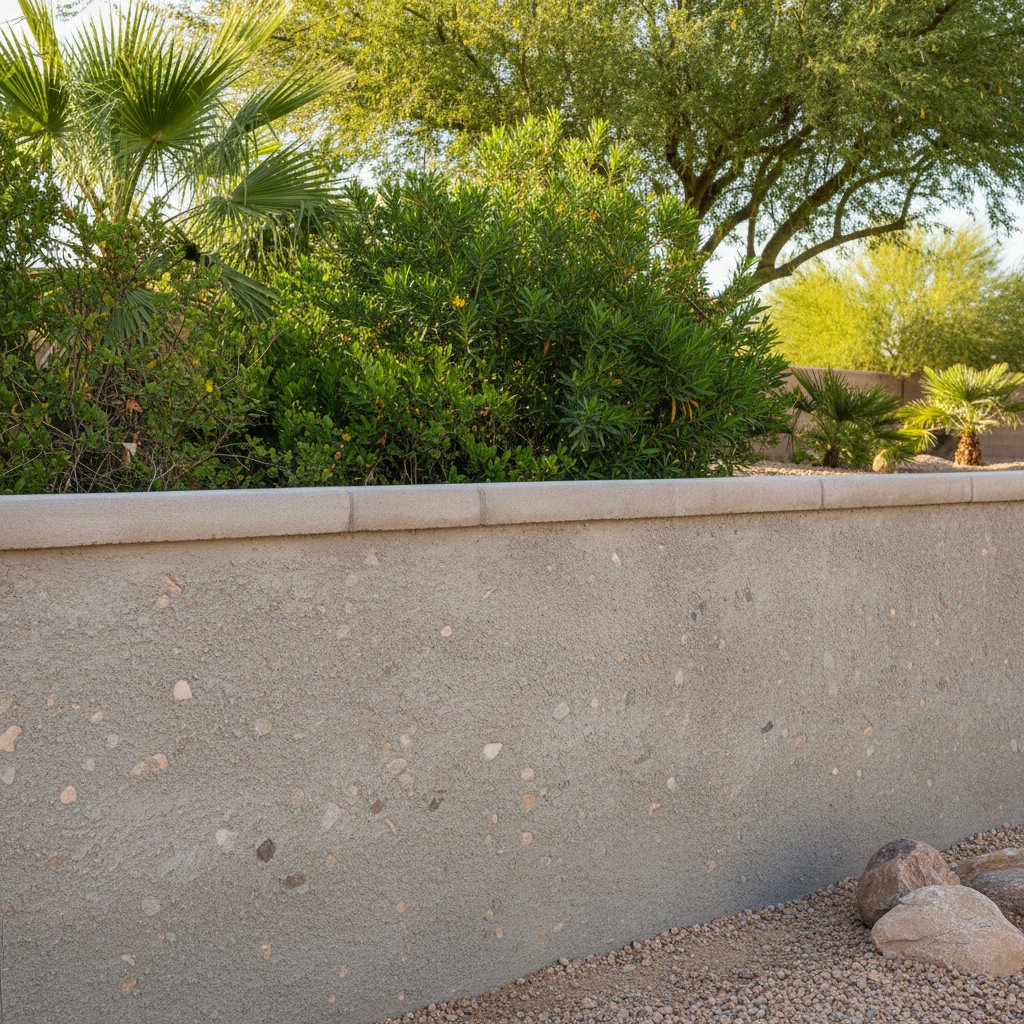
Thinking About a Concrete Retaining Wall?
So, you're looking at your yard and maybe thinking about a concrete retaining wall. Perhaps you've got a slope that's just a real pain to mow, or you're hoping to create some usable, flat space. Good call. Retaining walls aren't just practical, you know; they can seriously boost your property's curb appeal and even its value. That's especially true here in Bullhead City, where we often deal with sloped lots and erosion from those heavy monsoon rains.
But hey, before you grab a shovel, let's chat about what actually goes into these projects. There's a big difference between a small, decorative garden border and a structural wall holding back tons of earth. Understanding that difference is key to a successful project and, frankly, to keeping your property safe.
Before You Start: Planning & Permits
This is where a lot of folks trip up. You can't just build a wall wherever you feel like it. First off, you really need to understand your property lines. Don't build on your neighbor's land, obviously. Then, think about drainage. Water is a powerful force, no kidding, and if your wall isn't designed to handle it, you're just asking for trouble. You'll need to plan for proper drainage behind the wall, usually with gravel and a perforated pipe.
Here's the big one: permits. For anything more than a small, non-structural wall (usually under 3-4 feet high, depending on local codes and how much load it's holding), you're absolutely going to need a permit from the City of Bullhead City. This isn't just red tape, by the way; it's about making sure your wall is safe and won't collapse, causing damage or injury. They'll want to see plans, and for anything significant, those plans will need to be stamped by a licensed engineer. Trying to skip this step? Huge mistake. It can lead to fines, having to tear down your wall, and major headaches if something goes wrong down the line.
For smaller projects, like a decorative border that's less than two feet high and not holding back a lot of soil or any kind of structure, you might be able to handle the planning yourself. But if it's over three feet, or if there's any question about stability, you really need to consult with a professional engineer. They'll assess the soil conditions — which can be pretty sandy and loose around here, as you might know — and the load, then design a wall that'll stand the test of time.
The Build: DIY or Call a Pro?
Alright, let's get down to the actual work. This is where you decide if you're getting your hands dirty or picking up the phone.
When You CAN Do It Yourself (Carefully)
- Small, Non-Structural Walls: If you're building a garden bed border, or a purely decorative wall under, say, 18-24 inches high, and it's not holding back a significant slope or any structures, you can probably handle it.
- Materials: You'll likely use concrete blocks (CMUs) or poured concrete for durability. For blocks, you'll need to dig a proper trench for the footing, lay a solid concrete base, and then stack and mortar your blocks. If you're pouring concrete, you're looking at building forms, mixing and pouring the concrete, and then curing it.
- Tools & Skills: You'll need shovels, levels, measuring tapes, a wheelbarrow, possibly a concrete mixer (or a lot of elbow grease for bags), and basic masonry skills. Accuracy is key here. A wall that's not level or plumb will look bad, and it could even fail.
When You ABSOLUTELY Need a Professional
- Walls Over 3-4 Feet High: This is almost always a job for the pros. The engineering, the sheer weight, the potential for failure – it's just too much for most homeowners to safely tackle.
- Walls Holding Significant Loads: If your wall is supporting a driveway, a patio, a building, or a large amount of soil on a steep slope, don't even think about DIY. This requires specialized knowledge of soil mechanics, drainage, and structural integrity.
- Complex Designs or Poor Soil: If your design is anything more than a straight line, or if you've got really challenging soil conditions (like that loose, sandy soil we often see near the river), a professional concrete contractor like us at Top Notch Concrete Solutions knows how to handle it. We've got the equipment and the experience to ensure the foundation is solid and the wall is built to last.
- Permit Requirements: If your project requires an engineered plan and permits, you're almost certainly going to need a professional to execute it correctly. They're familiar with the codes and inspection processes.
Honestly, even for some of those