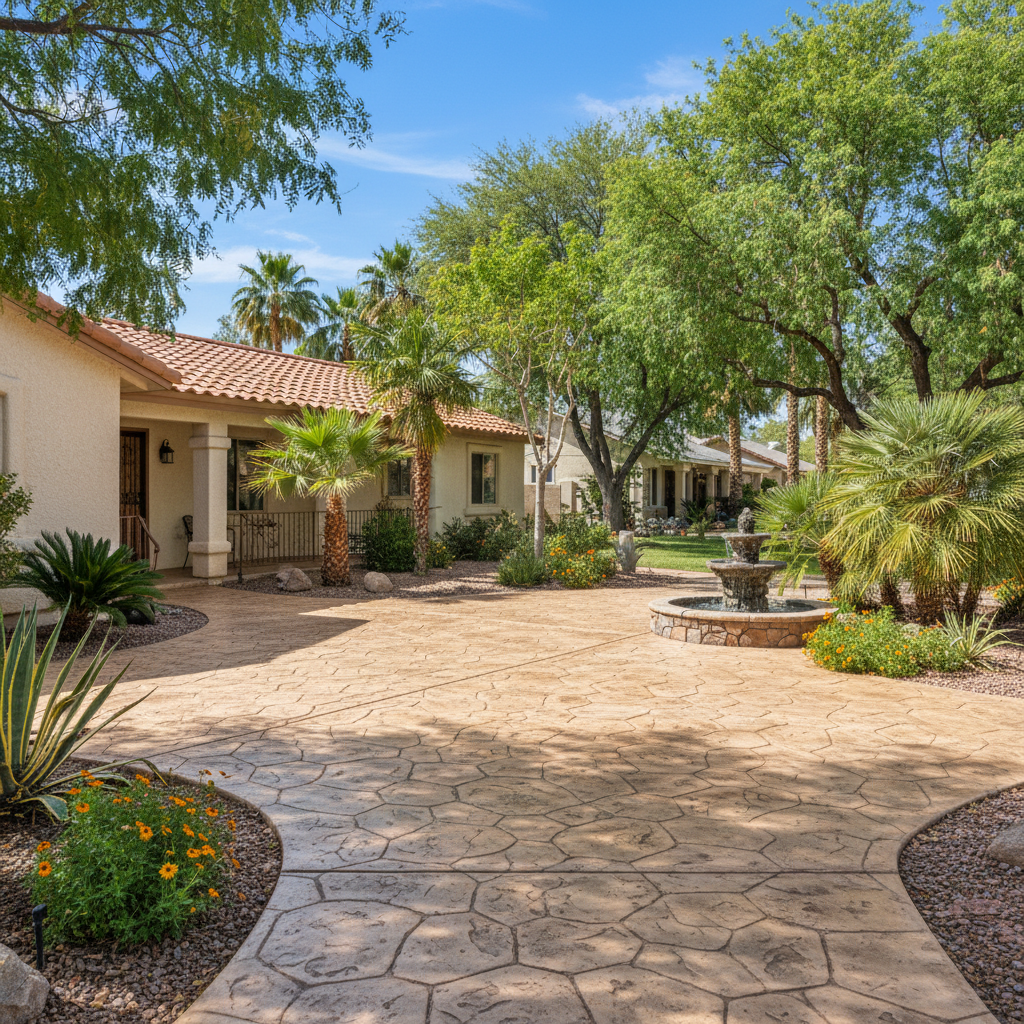
You've invested in stamped concrete, and it looks fantastic. Maybe it's a patio, a driveway, or a walkway around your pool. It adds a ton of curb appeal and can really make your property stand out here in Bullhead City. But just like anything else, it's not a 'set it and forget it' deal, especially with our intense sun and occasional monsoon downpours.
I've seen a lot of stamped concrete jobs over the years, both good and bad, and a big difference comes down to how well it's maintained. Good maintenance isn't just about keeping it pretty; it's about extending its life and protecting your investment. Let's talk about what you need to do.
Regular Maintenance: Your First Line of Defense
This isn't rocket science, but it's crucial. The biggest enemy of your stamped concrete, besides the sun, is dirt and debris. When fine dust, sand, and grit from our desert winds sit on the surface, they act like sandpaper every time you walk or drive on it. This wears down the sealer, which is your concrete's protective shield.
- Sweep it regularly: A good broom or leaf blower once a week, or more often if it's windy, will do wonders. Get rid of leaves, dust, and anything else that's settled.
- Hose it down: Every month or two, give it a good rinse with a garden hose. If you've got stubborn dirt, a little mild dish soap and a soft brush can help. Just make sure to rinse thoroughly so you don't leave any residue.
- Watch for spills: Oil, grease, paint, or anything acidic can stain or damage your sealer. Clean these up immediately. The longer they sit, the harder they are to remove, and sometimes they're impossible without damaging the finish.
That's the everyday stuff. Now, let's talk about the real heavy lifting.
Sealing: The Secret to Longevity in the Desert
This is probably the single most important thing you can do for your stamped concrete, especially in Bullhead City. Our UV rays are brutal. They break down sealers faster than in cooler climates. A good quality sealer protects against stains, abrasion, and UV damage, and it really makes those colors pop.
How often should you reseal? It varies. For high-traffic areas like driveways, I usually recommend resealing every 1-3 years. For patios or walkways that see less action, you might get 3-5 years out of it. You'll know it's time when the surface starts to look dull, the colors fade, or water no longer beads up on the surface. If water soaks in instead of beading, your sealer isn't doing its job anymore.
Before resealing, the concrete needs to be thoroughly cleaned. Sometimes a simple pressure wash is enough, but if there's old, failing sealer, or tough stains, it might need a chemical stripper or a deeper clean. Don't skip this step; applying new sealer over dirty or poorly prepped concrete is a waste of time and money. It won't stick right, and it'll look terrible.
Warning Signs: When to Pay Closer Attention
Your concrete will tell you when it's having issues. You just need to know what to look for.
- Fading color: This is a classic sign that the sealer is breaking down and the sun is getting to the pigment.
- Flaking or peeling sealer: This means the sealer wasn't applied correctly, or it's just reached the end of its life. You'll see bits of the clear coat lifting off.
- Cracks: Small hairline cracks are pretty common in concrete, especially with our temperature swings. But if you see cracks getting wider, longer, or if they're raising one section of concrete higher than another, that's a bigger problem.
- Pitting or spalling: This is when small pieces of the concrete surface break away, leaving little pockmarks. This can be caused by freeze-thaw cycles (rare but possible here on cold nights if water is trapped), but more often it's due to poor concrete mix or finishing, or chemical damage.
- White spots or haziness: This is often a sign of moisture trapped under the sealer, or efflorescence (salts coming to the surface). It can also happen if the sealer was applied too thick or in the wrong conditions.
When to Call a Professional
Look, some things you can DIY, like sweeping and hosing. Even resealing can be a DIY project if you're handy and have the right equipment. But there are times when you really should call in the pros, like us at Top Notch Concrete Solutions.
- Significant cracking: If you have structural cracks or cracks that are growing, you need an expert opinion. We can assess the cause and recommend the best repair method, whether it's crack injection or something more involved.
- Extensive sealer failure: If your sealer is peeling or flaking everywhere, or if it's hazy and you can't fix it with a simple cleaning, it might need to be completely stripped and reapplied. That's a messy, labor-intensive job that's best left to someone with experience and the right tools.
- Deep stains or chemical damage: Some stains are just too tough for home remedies. We have specialized cleaners and techniques that can often remove what you can't.
- Surface pitting or spalling: This usually indicates a more serious issue with the concrete itself, and it often requires patching or resurfacing to prevent further damage.
- You're just not comfortable doing it yourself: No shame in that! Concrete work can be tricky, and getting it wrong can be costly. If you want it done right and you want peace of mind, give us a call.
Taking care of your stamped concrete isn't a huge chore, but it does require some attention. A little effort now will save you a lot of headaches and expense down the road, and keep your Bullhead City home looking great for years to come.